
Currently, according to the International Labour Organisation (ILO), over 42 million people worldwide are engaged in sex work, most of them in vulnerable social and legal conditions. In this context, 2 June gains even more significance as a day of rights advocacy and awareness-raising.
Contents
Why is International Sex Workers’ Day celebrated?
Every year on 2 June, International Sex Workers’ Day is commemorated. The date traces back to the historic 1975 protest in Lyon, France, where over a hundred sex workers occupied the Saint-Nizier church to denounce police violence, institutional repression, and the harsh living conditions they faced.
This act of courage marked a turning point in the fight for the recognition of their rights and the dignity of their profession. Since then, 2 June has become a day of worldwide advocacy and visibility.
You might be interested in: World Day against Trafficking in Persons
What does the red umbrella symbolise for many sex worker organisations?
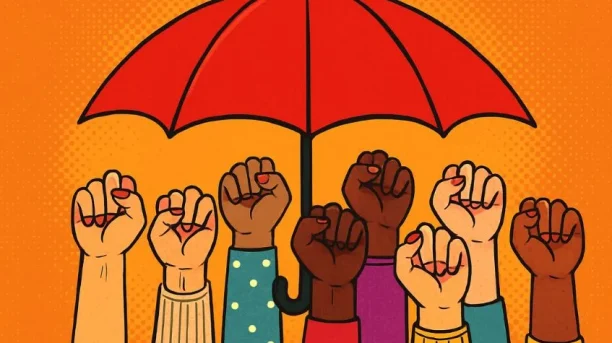
The red umbrella is one of the most recognised symbols in the fight for sex workers’ rights. It first appeared in 2001 during an international conference in Venice and represents resistance and protection against violence, stigma, and discrimination.
Today, many sex worker institutions use the red umbrella during marches, demonstrations, and events to reaffirm their demand for human and labour rights.
What rights are sex workers currently demanding?
Sex workers around the world continue to fight for the full recognition of their rights. Their main demands include:
- Decriminalisation of sex work.
- Recognition of sex work as legitimate labour.
- Access to labour rights: social security, retirement, sick leave.
- Protection against violence and abuse.
- Elimination of social and political stigma.
What challenges do they still face?
Despite progress, sex workers continue to face significant challenges, such as:
- Criminalisation in many countries.
- Stigma, which hinders their access to healthcare and justice.
- Lack of specific labour regulations to protect them.
- Police and societal violence.
- Exclusion from social protection systems.
What progress has been made in sex workers’ rights?
In recent decades, some countries have made important strides towards recognising and protecting sex workers’ rights.
Europe
The Netherlands is the most well-known European example, where sex work has been legal and regulated for decades. Sex workers there have recognised labour rights and access to specific public health programmes, making the country one of the most advanced in this area.
In 2022, Belgium became the first country in Europe to fully decriminalise sex work and regulate it like any other profession, guaranteeing access to social security, labour rights, and legal protection.
In 2024, Italy approved the inclusion of sex work in the “Codice ATECO,” the official economic activity classification system. Implemented earlier this year, this step is seen as significant progress towards regulating sex work. It allows sex workers to register as self-employed, access social benefits, and obtain healthcare coverage, though the debate on full regulation remains open.
Latin America
Across the Atlantic, the situation in Latin America varies by country. In places like Argentina and Uruguay, active sex worker movements have achieved notable advances in rights recognition, access to healthcare, and harm reduction programmes. However, in other countries, such as Mexico and Colombia, stigma and criminalisation remain significant challenges.
New Zealand and Australia
Countries like New Zealand and certain regions of Australia have long been pioneers, implementing decriminalisation models that prioritise the safety and well-being of sex workers.
However, the struggle remains global, and 2 June serves as a reminder that respect, dignity, and human rights must be universal, without exception.
The role of organisations in the fight for sex workers’ rights
Organisations supporting sex workers play a crucial role in the fight for rights. They provide not only legal and emotional support but also promote skill-building programmes and public awareness campaigns.
Additionally, these institutions advocate for sexual health initiatives, ensuring access to medical testing for sexually transmitted infections. In recent years, they have also expanded their focus to defending digital rights, protecting sex workers’ privacy and safety online, an increasingly vital space for their professional activities.
A persistent and necessary fight
International Sex Workers’ Day not only honours the memory of those who initiated this struggle but also highlights the importance of continuing to work towards a fairer and more inclusive society. Visibility, destigmatisation, and the guarantee of fundamental rights are essential for everyone to practice their profession with dignity and safety. The road is long, but every step counts.
